
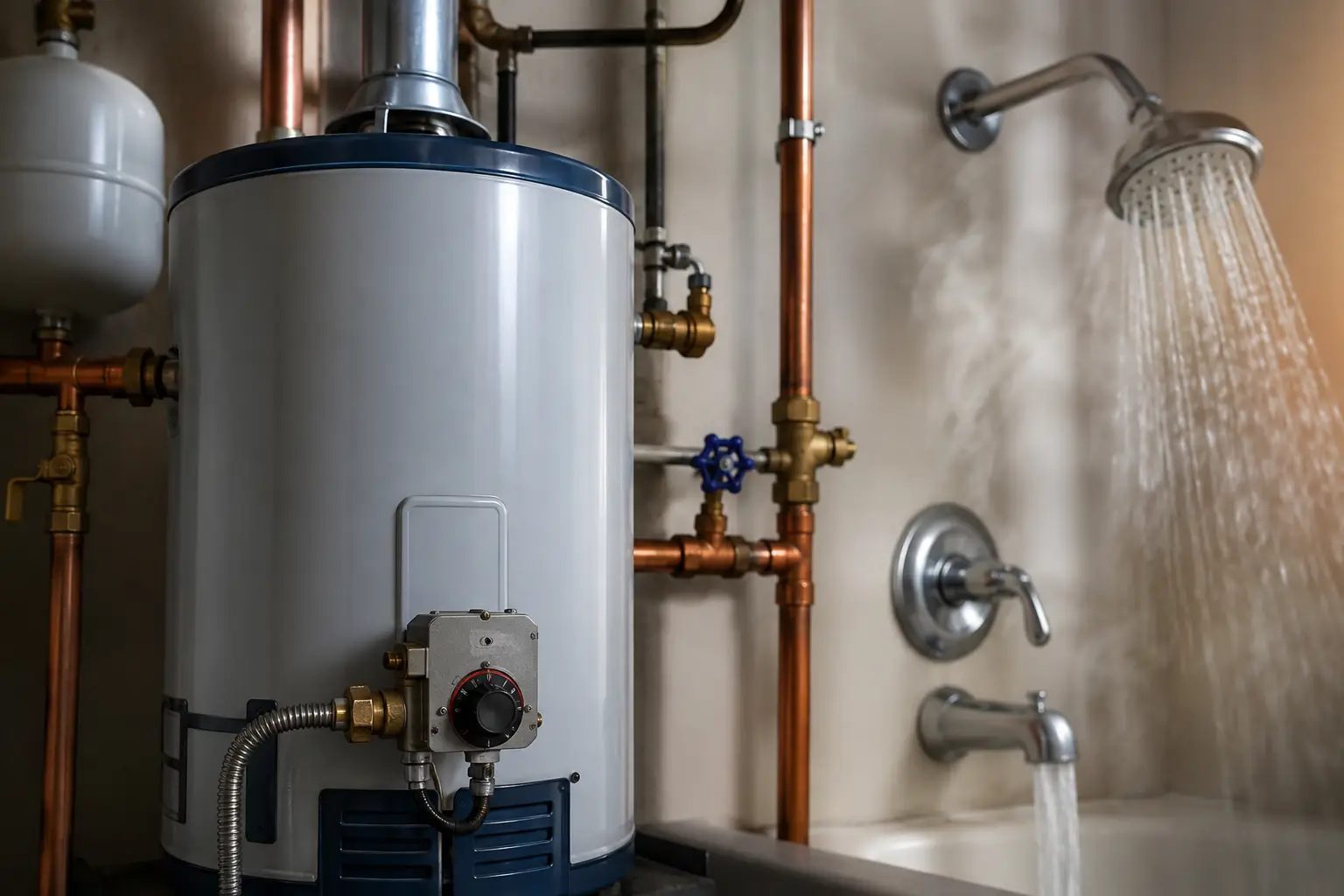
Nothing disrupts a morning routine like a shower that turns cold halfway through, or a kitchen faucet that suddenly runs lukewarm during dishwashing. If you rely on a propane water heater to keep your household running smoothly, inconsistent hot water is more than an inconvenience — it’s usually a sign that something in your system needs attention. Understanding the root causes can help you decide whether a simple fix will solve the problem or whether it’s time to call in a professional.
Sediment Buildup in the Tank
One of the most common culprits behind fluctuating water temperatures is sediment accumulation at the bottom of the tank. Over time, minerals from your water supply settle at the base of the unit, forming a layer that acts as an insulating barrier between the burner and the water above it. This buildup forces the heater to work harder, reduces its efficiency, and often results in water that heats unevenly or takes longer to reach the desired temperature.
- Sediment buildup is more common in homes with hard water
- It can cause popping or rumbling noises from the tank
- Left untreated, it can shorten the lifespan of the heater significantly
- Annual flushing is typically recommended to prevent buildup
Faulty or Failing Thermostat
The thermostat on your propane water heater controls when the burner activates and how hot the water gets. When this component malfunctions, it may cause the burner to cycle on and off at the wrong times, leading to water that alternates between too hot and too cold. A thermostat that has drifted out of calibration is a frequent cause of homeowners noticing inconsistency rather than a total loss of hot water, which can make the issue trickier to diagnose without a trained eye.
Problems With the Gas Supply or Burner
Since propane water heaters depend on a steady fuel supply to generate heat, any disruption in gas flow can directly affect water temperature consistency. A partially clogged burner, a malfunctioning gas valve, or low propane levels in the tank can all cause the burner to underperform. When the burner isn’t producing a strong, steady flame, the heater struggles to maintain consistent output, and homeowners often notice temperature swings that seem to happen randomly throughout the day.
| Gas Supply Issue | Effect on Hot Water |
|---|---|
| Low propane tank level | Weak or intermittent flame, reduced heating capacity |
| Clogged burner orifice | Uneven flame pattern, inconsistent heat transfer |
| Faulty gas valve | Burner fails to ignite reliably or shuts off early |
| Ventilation blockage | Incomplete combustion, reduced burner performance |
Undersized Water Heater for Household Demand
Sometimes the issue isn’t a malfunction at all — it’s simply a mismatch between the size of the unit and the household’s hot water needs. A propane water heater that was appropriately sized for a smaller family may struggle to keep up once more people are showering, running the dishwasher, and doing laundry around the same time. This kind of inconsistency tends to show up specifically during high-demand periods, such as busy mornings or weekend afternoons.
Aging Components and Wear Over Time
Every water heater has a lifespan, and as components age, their performance can become less reliable. Heating elements, dip tubes, and thermocouples all experience wear, and as they degrade, they may not function as precisely as they once did. A cracked or deteriorating dip tube, for example, can allow cold water to mix with hot water inside the tank, resulting in inconsistent output even when every other part of the system seems to be working fine.
- Dip tube damage allows cold and hot water to mix
- Thermocouple wear can cause the pilot light to behave erratically
- Anode rod corrosion accelerates tank deterioration
- Units older than 8-10 years are more prone to multiple issues at once
Tankless System Flow Rate Issues
For households using a tankless propane water heater, inconsistent temperatures are often tied to flow rate rather than the burner itself. If too many fixtures draw hot water simultaneously, the unit may not be able to maintain its target temperature across all of them. Mineral scale inside the heat exchanger can also restrict flow and reduce the unit’s ability to respond quickly to demand, producing the same frustrating temperature swings homeowners experience with tank-style systems.
Serving Homeowners Across Middle Tennessee
Advanced Propane Inc proudly supports residential and commercial customers throughout Lebanon, where growing neighborhoods rely on dependable propane service for everyday comfort. In Ashland City, homeowners along the Cumberland River count on consistent delivery and maintenance to keep their systems running through every season. Families in Cookeville trust local expertise to service both traditional tank and tankless propane water heaters, while residents of Hartsville benefit from prompt, personalized attention for propane appliances of every kind. No matter which of these communities you call home, a qualified technician familiar with your area’s water conditions and climate can help pinpoint the exact cause of your hot water inconsistency.
When to Call a Professional
While some causes of inconsistent hot water can be addressed with routine maintenance, others require the diagnostic tools and experience of a trained propane technician. If flushing the tank, checking the thermostat, or confirming propane levels doesn’t resolve the issue, it’s time to schedule a professional inspection. A technician can safely assess the burner assembly, gas valve, venting system, and internal components to identify the true source of the problem before it leads to a complete system failure.
FAQs
1. Why does my propane water heater run out of hot water faster than it used to?
This is often a sign of sediment buildup reducing tank capacity, or a heating element that’s no longer functioning at full strength.
2. Can low propane levels cause temperature swings?
Yes, a low tank can weaken the burner’s flame, leading to reduced and inconsistent heating performance.
3. How often should a propane water heater be flushed?
Most manufacturers recommend flushing the tank at least once a year to prevent sediment-related issues.
4. Is inconsistent hot water dangerous?
It’s not typically dangerous on its own, but it can indicate a failing component that should be inspected before it worsens.
5. Does a tankless propane water heater experience the same issues as a tank model?
Some causes overlap, such as gas supply problems, but tankless units are more commonly affected by flow rate and mineral scale.
6. How do I know if I need a repair or a full replacement?
A technician can evaluate the age, condition, and repair history of your unit to recommend whether repair or a full replacement offers better long-term value.
Contact Advanced Propane Inc
If you’re experiencing inconsistent hot water and want a professional diagnosis, Advanced Propane Inc is ready to help. Reach out at +1 615 443 1883 or email info@advancedpropaneinc.com to schedule service across Lebanon, Ashland City, Cookeville, Hartsville, and surrounding Middle Tennessee communities.