
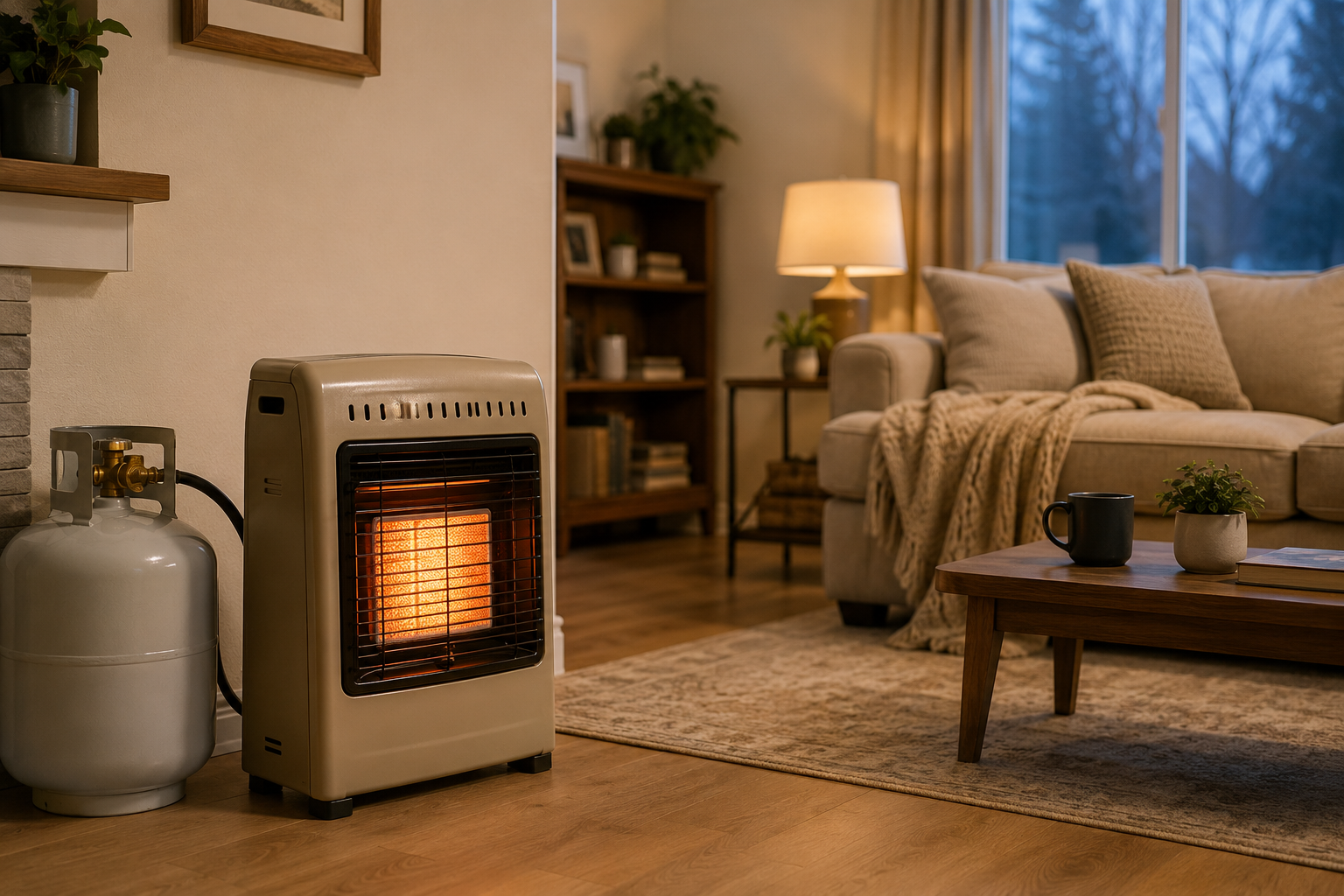
Propane space heaters are one of the most efficient ways to warm up a room, cabin, garage, or workshop without waiting on a central heating system to catch up. But where you place a propane space heater matters just as much as the heater itself. The wrong placement can reduce efficiency, create safety hazards, or even violate local fire codes. If you’re a homeowner in Middle Tennessee looking to get the most out of your propane space heater this winter, here’s what you need to know about proper placement, safety clearances, and ventilation requirements.
Why Placement Matters for Propane Space Heaters
A propane space heater works by burning propane gas to produce radiant or convective heat. Because it involves an open flame or heating element, where you place the unit directly affects three things: safety, heating efficiency, and indoor air quality. Poor placement can lead to uneven heat distribution, increased fire risk, or buildup of combustion byproducts indoors. Getting placement right from the start means fewer headaches and a warmer, safer home throughout the colder months.
Key Factors to Consider Before Placing Your Heater
Before you decide on a spot for your propane space heater, think through the following:
- Clearance from combustibles — Keep at least 36 inches of clearance from curtains, furniture, bedding, and paper materials.
- Floor surface — Place the heater on a flat, non-flammable surface rather than carpet or rugs when possible.
- Ventilation requirements — Unvented heaters need adequate room air exchange; vented models require a proper flue or chimney connection.
- Foot traffic areas — Avoid placing heaters where people, kids, or pets frequently walk or play.
- Proximity to doors and windows — Drafts can affect heater performance and create uneven heating.
- Power and fuel access — Ensure the propane tank connection and any electrical components are easily reachable for maintenance.
Best Rooms for a Propane Space Heater
Living Rooms and Family Rooms
Living areas are popular choices because they’re the most-used spaces in a home. Position the heater away from walkways and seating areas, ideally against a wall with adequate clearance, so heat radiates into the open room without obstruction.
Bedrooms
If you’re using a space heater in a bedroom, always choose a model rated safe for enclosed sleeping areas, and never leave it running unattended overnight unless it’s specifically designed and certified for that use. Placement should be away from bedding and at least several feet from the bed itself.
Garages and Workshops
Garages and workshops often lack central heating, making propane space heaters a practical solution. Since these spaces may store flammable materials like fuel, paint, or wood, placement should prioritize maximum clearance from stored items and good ventilation, especially if vehicles are present.
Basements
Basements tend to be cooler and less insulated, making them good candidates for supplemental heat. However, basements often have lower ventilation rates, so it’s important to confirm the heater type is appropriate for a below-grade, enclosed space.
Rooms and Areas to Avoid
Not every space is suitable for a propane space heater. Avoid placing units in:
- Bathrooms or areas with high humidity
- Small, poorly ventilated closets or storage rooms
- Directly beneath shelving or hanging décor
- Near flammable liquids, aerosols, or fuel storage
- Areas with heavy pet or child traffic
Indoor vs. Outdoor Propane Heater Placement
| Factor | Indoor Placement | Outdoor Placement |
|---|---|---|
| Ventilation needs | Requires vented unit or adequate air exchange | Naturally ventilated |
| Clearance requirements | 36 inches from combustibles | Wider clearance recommended |
| Common uses | Living rooms, garages, basements | Patios, porches, outdoor gatherings |
| Heater type | Vented or certified unvented models | Portable or patio-style heaters |
| Monitoring | Should have CO detector nearby | Less risk of CO buildup |
Ventilation and Carbon Monoxide Safety
Proper ventilation is one of the most important aspects of propane space heater placement. Unvented propane heaters under 40,000 BTU are considered very safe for indoor use and produce only very small amounts of carbon monoxide. This is because they come equipped with a built-in Oxygen Depletion Sensor (ODS) safety pilot, which continuously monitors oxygen levels in the room and automatically shuts the heater off before oxygen drops to an unsafe level. Even with this safeguard, it’s still good practice to install a carbon monoxide detector near any room where a propane space heater is used, and to never operate a heater in a fully sealed, airtight room. Vented heaters, which exhaust combustion gases outdoors through a flue, offer added peace of mind for enclosed living spaces.
Tips for Safe and Efficient Placement
- Place the heater on a stable, level, non-flammable surface
- Keep at least 36 inches of clearance on all sides
- Position the unit away from doorways and high-traffic paths
- Avoid placing near curtains, upholstery, or paper products
- Install a carbon monoxide detector in the same room
- Have your propane tank and heater inspected annually by a professional
Propane Space Heater Services Across Middle Tennessee
Advanced Propane Inc helps Middle Tennessee homeowners choose, install, and maintain propane space heaters safely, whether you’re warming a single room or a detached outbuilding. In Lebanon, we support both new builds and older farmhouses through cold winter mornings. Ashland City residents often turn to us for heating garages and workshops beyond the reach of central systems. Cookeville homeowners rely on seasonal refills and safety inspections, while Hartsville families count on dependable delivery and safe placement guidance for older and renovated homes alike. Wherever you’re located, our team is ready to help you stay warm all winter.
Frequently Asked Questions
1. Can I place a propane space heater in a bedroom?
Yes, but only if the unit is specifically rated for enclosed, unattended, or sleeping-area use. Always maintain clearance from bedding and combustibles.
2. How much clearance does a propane space heater need?
Most manufacturers recommend at least 36 inches of clearance from walls, furniture, and any flammable materials.
3. Do I need a carbon monoxide detector with a propane space heater?
Yes. Even though unvented models under 40,000 BTU with a built-in ODS safety pilot produce very little CO and are designed to shut off automatically if oxygen levels drop, any room using a propane space heater should still have a working carbon monoxide detector nearby as an added layer of protection.
4. Can propane space heaters be used in garages?
Yes, garages are a common and practical placement, but ventilation and clearance from stored flammable materials are essential.
5. Is it safe to run a propane space heater overnight?
Only certain models are designed for continuous overnight use. Check your unit’s rating before leaving it running unattended.
6. How often should propane heating equipment be inspected?
It’s recommended to have your propane tank, lines, and heater professionally inspected at least once a year, ideally before winter begins.
Contact Advanced Propane Inc
Ready to heat your home safely and efficiently this season? Contact Advanced Propane Inc today for propane space heater delivery, installation guidance, and safety inspections across Lebanon, Ashland City, Cookeville, Hartsville, and the surrounding Middle Tennessee area.
Phone: +1 615 443 1883
Email: info@advancedpropaneinc.com