
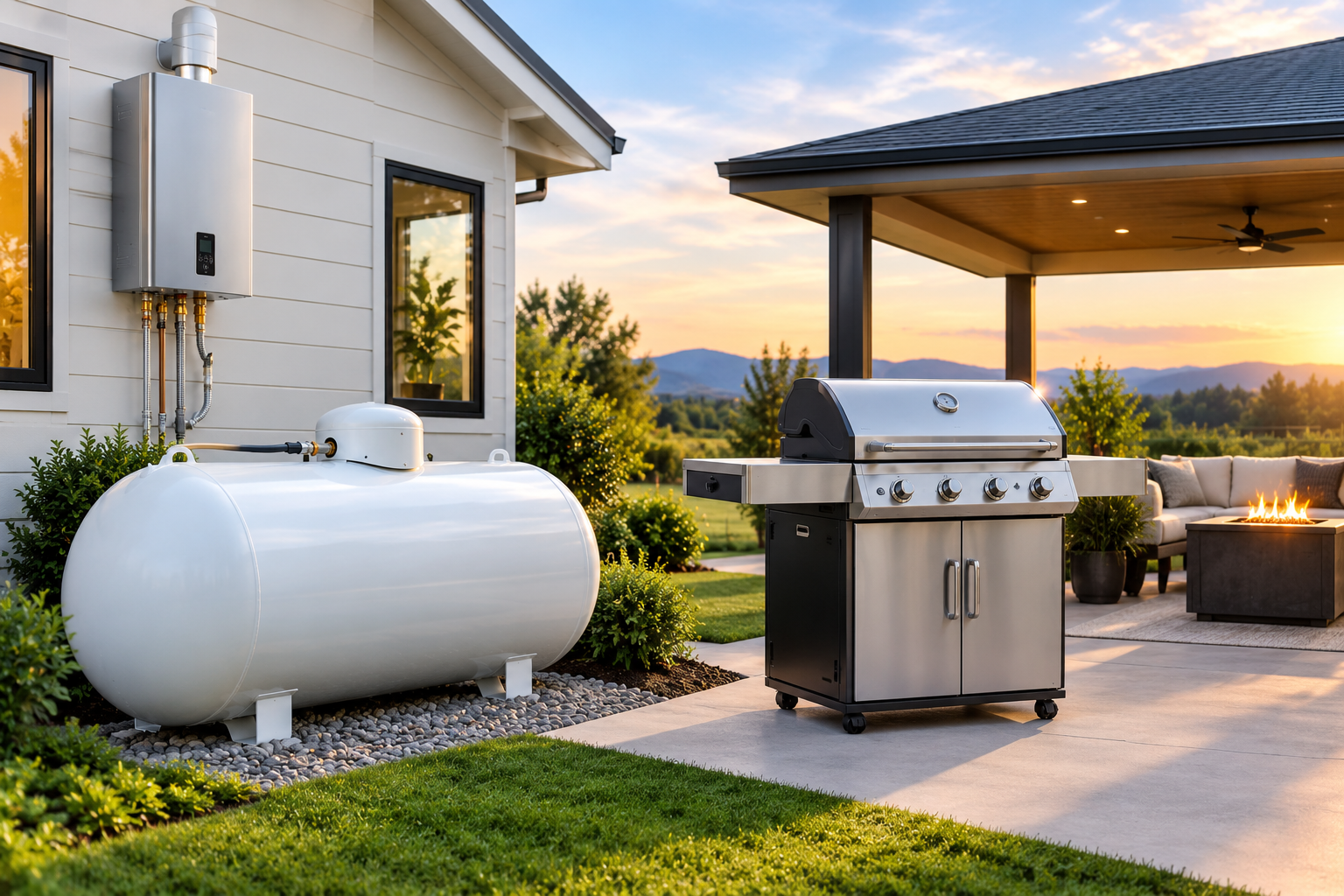
Homeowners across Middle Tennessee are paying closer attention to the energy systems and appliances they choose for their homes. Propane can provide an efficient and versatile energy option for heating, cooking, water heating, clothes drying, and backup power.
But which propane appliances can add the most value to a home? The answer depends on the property, household needs, local energy costs, existing equipment, and what future buyers may be looking for. Rather than assuming one appliance is right for every home, it helps to understand the benefits and considerations associated with each option.
This guide looks at several propane appliances that can contribute to comfort, convenience, efficiency, and potential appeal when properly selected and maintained.
Why Consider Propane Appliances for Your Home?
Propane appliances can offer several practical benefits. Propane is stored on-site, allowing homeowners to maintain a fuel supply at their property rather than depending entirely on a utility line for the fuel itself.
Depending on the equipment, propane can be used for:
- Home heating
- Cooking
- Water heating
- Clothes drying
- Fireplaces and outdoor fire features
- Backup generator fuel
Propane appliances can also provide strong performance, but the actual benefits depend on the equipment, installation, maintenance, fuel prices, household usage, and other factors.
For homeowners thinking about long-term property value, it is also important to remember that an appliance upgrade does not guarantee a specific increase in resale value. Buyer preferences and local market conditions can have a significant influence.
Propane Furnaces
A propane furnace can be an important part of a home’s heating system, particularly in areas where natural gas service is unavailable.
Some high-efficiency propane furnaces can achieve efficiency ratings of 95% or higher. These systems are designed to convert a large portion of the fuel’s energy into usable heat, although actual performance depends on the equipment and operating conditions.
A propane furnace can offer:
- Reliable home heating when properly installed and maintained
- Efficient operation with compatible high-efficiency equipment
- A propane heating option for homes without natural gas service
- Consistent heat during cold weather
- Compatibility with a home’s existing propane supply
Homeowners considering a furnace upgrade should compare equipment specifications, efficiency ratings, installation requirements, and expected usage rather than choosing a system based only on a general efficiency number.
Propane Water Heating
Water heating is another area where propane can be used. Propane water heaters are available in different designs, and the right option depends on household demand, available space, equipment requirements, and other factors.
Some propane water heaters can provide hot water efficiently and may offer strong recovery performance for households with higher hot-water demand.
It is important to consider the specific model because some water-heating equipment requires electricity for controls, ignition, pumps, or other components.
What About Tankless Water Heaters?
Tankless water heaters can also be an option for some homeowners, depending on household demand, available space, and installation requirements.
When comparing water heaters, homeowners should consider fuel type, household demand, equipment efficiency, installation requirements, available space, and maintenance needs.
Propane Ranges and Cooktops
For homeowners who enjoy cooking, a propane range or cooktop can provide precise flame control and quick heat adjustment.
A propane cooking appliance may offer:
- Direct flame control
- Quick temperature adjustments
- Consistent cooking performance
- A familiar option for homeowners who prefer gas cooking
Propane cooking equipment can also remain a useful part of an outage-preparedness plan, but homeowners should check the specific appliance’s ignition and electrical requirements. Not every propane range will operate without electricity.
Kitchen improvements can contribute to a home’s overall appeal, although the effect on resale value depends on the property, local market, quality of the installation, and buyer preferences.
Propane Fireplaces and Fire Features
Propane fireplaces can add both comfort and visual appeal to a home. They can provide supplemental heat and create a convenient alternative to traditional wood-burning fireplaces.
Outdoor propane fire pits and fire tables can also extend the usable living area of a property by creating a comfortable gathering space during cooler weather.
Depending on the model, propane fireplaces may require electricity for ignition, controls, fans, or other components. Homeowners should review the manufacturer’s specifications before assuming a fireplace will operate during a power outage.
Propane Clothes Dryers
Propane clothes dryers are another option for homeowners looking beyond traditional electric appliances.
Depending on the equipment and local energy costs, propane dryers may offer efficient heat production and can provide strong drying performance. Actual operating costs depend on propane prices, electricity rates, dryer efficiency, load size, and frequency of use.
For households that do frequent laundry, comparing the expected operating costs and performance of propane and electric dryers can help determine whether a propane model makes sense.
Propane-Powered Backup Generators
A propane-powered generator can provide an important backup power option for homeowners who want electricity available during a utility outage.
Compatible generators can use propane from an approved fuel supply to produce electricity for selected circuits or, depending on the generator and electrical setup, a larger portion of the home.
A generator can potentially support important equipment such as:
- Refrigerators and freezers
- Lighting
- Heating equipment
- Communications equipment
- Certain medical equipment
- Other essential electrical loads
However, generator performance depends on the generator’s capacity, electrical load, installation, and fuel supply.
Advanced Propane Inc does not sell generators. The company can provide propane service associated with generator setups, helping customers understand their propane needs and delivery options.
How Propane Appliances Can Contribute to Home Appeal
There is no single appliance that guarantees a higher resale price. The contribution of an appliance upgrade depends on the overall property and the expectations of potential buyers.
Factors that may influence how an appliance upgrade is viewed include:
- Condition and age of the equipment
- Energy efficiency
- Quality of installation
- Maintenance history
- Local fuel availability
- Existing home infrastructure
- Buyer preferences
- Local real estate conditions
A well-maintained propane heating system may be useful to a buyer who wants propane heating. A propane range may appeal to someone who enjoys gas cooking. A backup generator may be valuable to someone who prioritizes outage preparedness.
The key is choosing equipment that makes sense for the home rather than installing an appliance simply because it is marketed as a resale upgrade.
Propane Appliance Comparison
| Appliance | Potential Benefits | Important Considerations |
|---|---|---|
| Propane Furnace | Home heating and efficient operation with compatible high-efficiency equipment | Equipment efficiency, home size, installation, maintenance |
| Propane Water Heater | Hot-water production and strong recovery performance with some models | Household demand, equipment requirements, installation |
| Propane Range | Direct flame control and cooking flexibility | Model-specific electrical and ignition requirements |
| Propane Fireplace | Supplemental heat and ambiance | Venting, installation, model requirements |
| Propane Dryer | Efficient heat production and drying performance | Fuel and electricity costs, usage, model efficiency |
| Propane Generator | Backup electricity during utility outages | Generator capacity, electrical load, fuel supply |
How to Choose the Right Propane Appliance
Instead of choosing an appliance based solely on its potential resale appeal, start with the needs of the household.
Consider questions such as:
What does your home already use?
If a property already has propane service and a properly sized tank, adding another compatible propane appliance may be worth considering. Existing infrastructure can influence installation requirements and overall project costs.
What are your energy needs?
A household with high heating demand may have different priorities from a household primarily interested in cooking or backup power.
What are the operating costs?
Compare expected fuel consumption, current energy prices, appliance efficiency, and typical usage. Neither propane nor electricity is automatically less expensive in every situation. See how propane compares with electric for more detail.
What does the equipment require?
Some propane appliances require electricity for controls, ignition, blowers, or other components. Understanding these requirements is especially important if outage preparedness is one of your goals.
What maintenance is required?
Follow the manufacturer’s recommended maintenance schedule and keep records of service and repairs. Proper maintenance can help equipment operate as intended and gives future homeowners useful information about the property’s systems.
Smart Ways to Get the Most From Your Propane Appliances
Choosing suitable equipment is only part of the process. Proper installation, operation, and maintenance also matter.
Homeowners should:
- Follow the manufacturer’s installation and operating instructions.
- Use qualified professionals for applicable propane equipment installation.
- Follow the recommended maintenance schedule for each appliance.
- Keep records of installations, repairs, and maintenance.
- Monitor propane levels and arrange delivery before the supply becomes low.
- Make sure carbon monoxide and propane leak detectors are functioning properly.
- Have appliances inspected or serviced when recommended by the manufacturer or a qualified professional.
- Understand which appliances require electricity during an outage.
If you use multiple propane appliances, your overall propane consumption will naturally depend on how often each system operates. Discussing your actual equipment and usage with your propane provider can help with fuel planning.
Propane Service Across Middle Tennessee
Advanced Propane Inc serves homeowners and businesses throughout Middle Tennessee, including Lebanon, Ashland City, Cookeville, Hartsville, and surrounding communities.
Customers use propane for a variety of applications, including home heating, cooking, water heating, clothes drying, fireplaces, and generator-related fuel needs. Advanced Propane Inc can help customers understand their propane service and delivery options based on their specific equipment and usage.
Frequently Asked Questions
1. Which propane appliance can add the most value to a home?
There is no single appliance that provides the same value to every property. The potential appeal of a propane furnace, range, water heater, fireplace, dryer, or generator depends on the home’s existing systems, local market conditions, buyer preferences, equipment condition, and installation quality.
2. Are propane appliances cheaper to operate than electric appliances?
Operating costs depend on local propane and electricity prices, equipment efficiency, household usage, and the specific appliances being compared. Homeowners should compare their expected fuel consumption and current energy rates rather than assuming one energy source will always cost less.
3. Are propane appliances safe to use inside a home?
Propane appliances can be used safely when they are properly installed, operated, and maintained according to manufacturer requirements and applicable local requirements. Carbon monoxide and propane leak detectors can provide additional safety protection.
4. Can propane appliances work during a power outage?
Some propane appliances may continue operating during an outage, while others require electricity for controls, ignition, blowers, pumps, or other components. Check the specific appliance’s requirements before assuming it will operate without grid power.
5. How long do propane appliances last?
Service life varies by appliance type, model, installation, usage, maintenance, and operating conditions. Rather than relying on a universal lifespan, homeowners should follow manufacturer guidance and monitor the condition and performance of their equipment.
6. Can propane upgrades increase a home’s resale value?
Propane upgrades can contribute to a home’s overall appeal, but there is no guaranteed increase in resale value. The impact depends on factors such as the local housing market, buyer preferences, equipment condition, installation quality, and the home’s existing systems.
Final Thoughts
Propane appliances can provide homeowners with practical options for heating, cooking, water heating, drying clothes, creating comfortable living spaces, and preparing for power outages.
The best appliance for a particular home depends on the property’s existing infrastructure, household needs, equipment requirements, fuel costs, and long-term plans. A propane furnace may make sense for one homeowner, while another may place greater importance on cooking equipment, water heating, or backup power.
Rather than choosing an appliance simply because it is marketed as a resale upgrade, consider how it will serve your household today and how well the equipment fits the home.
Contact Advanced Propane Inc.
If you are considering propane appliances for your home or need help understanding your propane service and delivery options, contact Advanced Propane Inc.
Phone: 615-443-1883
Email: info@advancedpropaneinc.com
Advanced Propane Inc serves customers throughout Middle Tennessee, including Lebanon, Ashland City, Cookeville, Hartsville, and surrounding communities.