
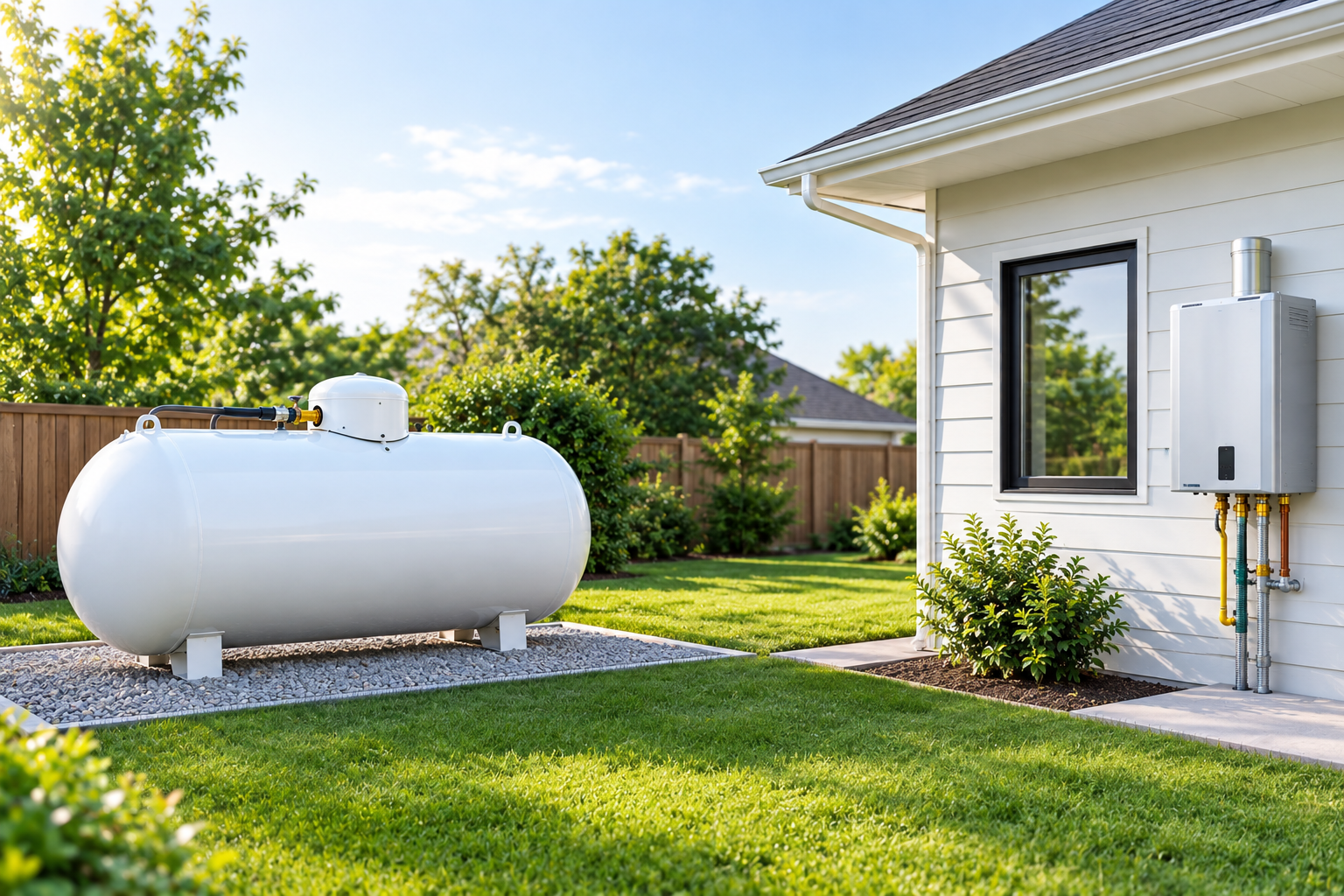
Choosing a propane tank involves more than deciding how much fuel you want to store. The space around the tank is also important for safe placement, convenient deliveries, maintenance, and compliance with applicable requirements. Whether propane is used for home heating, water heating, cooking, a generator, or other appliances, planning the tank location carefully can help avoid unnecessary changes later.
For homeowners across the areas served by Advanced Propane Inc., understanding the basic considerations behind propane tank placement can make the process easier. Because tank size, placement, clearances, and permit requirements can vary by property and jurisdiction, working with a propane professional is an important part of planning the installation.
Why Tank Placement and Space Matter
Propane is a safe and efficient fuel when the equipment is properly installed, maintained, and used. Tank placement is an important part of that process because the area surrounding a propane tank needs to provide appropriate clearance from buildings, property lines, ignition sources, openings, and other potential hazards.
Proper placement also makes routine propane deliveries easier. The delivery vehicle needs safe and unobstructed access to the tank, while the delivery hose must be able to reach the tank safely.
The exact clearance requirements depend on factors such as tank capacity, installation type, nearby structures, and applicable local requirements.
Planning the location before installation can help prevent costly changes later. A propane professional can evaluate the property and help identify a suitable location based on the equipment, property layout, and applicable requirements.
Common Residential Propane Tank Sizes
Residential propane tanks are available in several capacities, but the appropriate tank is not determined by property size alone. Your propane usage, appliances, expected consumption, delivery preferences, property layout, and other factors can all affect the appropriate setup.
Larger tanks can store more propane and may reduce the frequency of deliveries, but a larger tank is not automatically the right choice for every property.
Rather than choosing a tank based only on the number of appliances or the amount of available yard space, homeowners can work with their propane provider to determine an appropriately sized tank for their actual needs.
Typical Tank Dimensions
Tank dimensions vary by manufacturer and model, so measurements should always be confirmed before planning a specific installation.
| Tank Capacity | Approximate Physical Size | Common Applications |
|---|---|---|
| 120 gallons | Varies by manufacturer | Smaller propane applications |
| 250 gallons | Varies by manufacturer | Homes using propane for several appliances |
| 500 gallons | Varies by manufacturer | Higher-volume residential propane use |
| 1,000 gallons | Varies by manufacturer | Larger properties, agricultural, or commercial applications |
These capacities are examples of commonly available tank sizes rather than recommendations for a particular property. Advanced Propane can help determine the appropriate tank size based on your property’s actual propane needs.
Understanding Clearance Requirements
One of the most important parts of propane tank placement is maintaining the required clearance from nearby structures and potential ignition sources.
Clearances can apply to areas such as:
- Buildings and structures
- Property lines
- Doors and windows
- Mechanical equipment
- Electrical equipment
- Open flames and other ignition sources
- Combustible materials
- Other site-specific hazards
There is not one universal clearance distance that applies to every residential propane tank. Requirements can vary depending on tank capacity, installation type, site conditions, and local jurisdiction.
Applicable codes and standards, including NFPA requirements, may also influence tank placement. A qualified propane professional can evaluate the proposed location and help determine the appropriate clearances for the specific installation.
Aboveground vs. Underground Propane Tanks
Homeowners may consider either an aboveground or underground propane tank depending on their property and preferences.
Aboveground Tanks
Aboveground tanks are visible and generally provide straightforward access for inspection, maintenance, and deliveries. They need a suitable foundation or support surface and adequate space around the tank for safe access.
The location should also be selected with future maintenance and propane deliveries in mind.
Underground Tanks
Underground tanks can reduce the amount of visible equipment in the yard and may be an option for homeowners who want to preserve the appearance of their landscaping.
However, underground installations involve excavation and require careful planning. The tank still needs appropriate access for filling, inspection, and maintenance, and the area above and around the tank must remain suitable for the installation.
The best option depends on the property, propane requirements, installation conditions, and applicable local requirements rather than simply the amount of visible yard space available.
Factors That Affect Tank Placement
The tank itself is only one part of the space required for a propane installation. Several other factors should be considered when evaluating a potential location.
Delivery Access
A propane delivery vehicle needs safe and unobstructed access to the tank.
Instead of relying on a specific universal hose or truck distance, the proposed location should be evaluated to make sure the delivery vehicle can safely access the tank and the delivery hose can reach it.
Advanced Propane also performs a visual inspection during each propane delivery, helping identify visible conditions around the propane system that may require attention.
Ground Conditions
The tank should be placed on an appropriate, stable surface according to the installation requirements. Areas prone to flooding, erosion, shifting soil, or other site problems may not be suitable.
Overhead Conditions
Trees, branches, roof overhangs, utility lines, and other overhead obstacles should be considered when planning the location.
Nearby Openings and Equipment
Windows, doors, vents, air-conditioning equipment, electrical equipment, and other potential hazards may affect where a propane tank can be placed.
Future Propane Needs
If you are considering adding another propane appliance in the future, let your propane provider know during the planning process. That information can help Advanced Propane evaluate your overall propane needs and determine an appropriate tank setup rather than automatically recommending a larger tank.
How Tank Size Is Determined
There is no single tank size that works for every home. A property using propane only for a limited number of appliances may have different requirements from a home that relies on propane for multiple applications.
Factors that can influence tank sizing include:
- The propane appliances being used
- Expected propane consumption
- Home and property characteristics
- Seasonal usage patterns
- Delivery requirements
- Future propane needs
- Available and suitable installation space
Advanced Propane can help customers evaluate these factors and determine an appropriate tank size for their individual needs. The goal is to provide enough propane capacity for the customer’s usage without unnecessarily oversizing the tank.
Tank Placement, Permits, and Local Requirements
Propane tank placement may be subject to local regulations, permits, inspections, and other requirements.
Permit requirements for tank placement vary by jurisdiction. Advanced Propane can help customers understand the applicable local requirements and determine the appropriate next steps for their property.
This is one reason it is helpful to involve a propane professional before selecting a final tank location. A site that appears convenient may not meet the requirements that apply to the property.
Leased vs. Owned Propane Tanks
Whether a propane tank is leased or owned can also affect the planning process.
With a leased tank, the propane supplier generally evaluates the property and works with the customer on an appropriate installation. Tank ownership and service arrangements can vary, so customers should understand the terms that apply to their specific propane service.
If a customer owns a tank, they may have additional responsibilities related to maintenance, inspection, and compliance.
Regardless of ownership, having a propane professional evaluate the proposed location can help ensure that the tank placement works for safe operation, servicing, and propane delivery.
Safety Tips Around Your Propane Tank
Once a propane tank is installed, keeping the area around it accessible and clear is important. For more, see our propane safety information.
Homeowners should:
- Keep grass, brush, leaves, and debris away from the tank.
- Avoid storing combustible materials near the tank.
- Keep valves and other important components accessible.
- Avoid blocking the tank with landscaping or other objects.
- Do not modify or relocate the tank yourself.
- Keep vehicles and equipment from damaging the tank or its components.
- Follow the propane provider’s safety and maintenance recommendations.
If you smell propane or suspect a leak, leave the area immediately. Avoid operating electrical switches or creating an ignition source, move to a safe location, and contact your propane provider or emergency services as appropriate.
How Advanced Propane Can Help
Advanced Propane Inc. serves homeowners and businesses throughout its service area and can help customers understand propane tank sizing, placement, delivery access, and applicable local requirements.
Advanced Propane Inc. serves customers in Lebanon, Ashland City, Cookeville, Hartsville, and surrounding communities, providing propane solutions for homes, farms, and businesses. Customers throughout these service areas can work with Advanced Propane for help with propane tank sizing, placement, delivery access, and understanding applicable local requirements.
Whether your property is in a residential neighborhood, on a rural lot, or at a larger property, the right propane setup depends on your individual needs and site conditions.
Rather than guessing how much space you need or selecting a tank size based only on general examples, working with a propane professional can help you make a more informed decision.
Frequently Asked Questions
1. How far does a propane tank need to be from my house?
The required distance depends on the tank, installation, nearby structures, and applicable requirements. There is no single distance that applies to every property. Advanced Propane can help evaluate the proposed location and determine the applicable requirements.
2. Can I install a propane tank close to my deck or patio?
A propane tank may need specific clearance from decks, patios, doors, windows, appliances, and other features. The proposed location should be evaluated by a qualified propane professional before installation.
3. Is an underground tank a good option if I have limited yard space?
An underground tank can reduce the amount of visible equipment in the yard, but it requires excavation and appropriate planning. Whether it is suitable depends on the property, installation conditions, and propane requirements.
4. How much space does a delivery truck need?
The delivery vehicle needs safe, unobstructed access to the tank, and the delivery hose must be able to reach the tank safely. The appropriate access arrangement should be confirmed with the propane provider rather than relying on one universal distance.
5. Do I need a permit to install a propane tank?
Permit requirements vary by jurisdiction. Advanced Propane can help customers understand the local requirements that may apply to their tank placement and installation.
6. How do I know what size propane tank I need?
Tank sizing depends on your propane appliances, expected usage, property, delivery needs, and other factors. Advanced Propane can help determine an appropriate tank size for your individual needs.
Get the Right Propane Tank Setup for Your Property
The amount of space needed for a propane tank depends on more than the tank’s physical dimensions. Clearance requirements, property conditions, delivery access, propane usage, local requirements, and future needs can all affect the appropriate setup.
If you are planning a new propane tank or are unsure whether your current tank placement is appropriate, Advanced Propane Inc. can help you understand your options, determine an appropriate tank size, and plan for safe and convenient propane delivery.
Contact Advanced Propane Inc.
For questions about propane tanks, delivery service, tank placement, or propane needs for your home or business, contact Advanced Propane Inc.
📞 615-443-1883
📧 info@advancedpropaneinc.com