
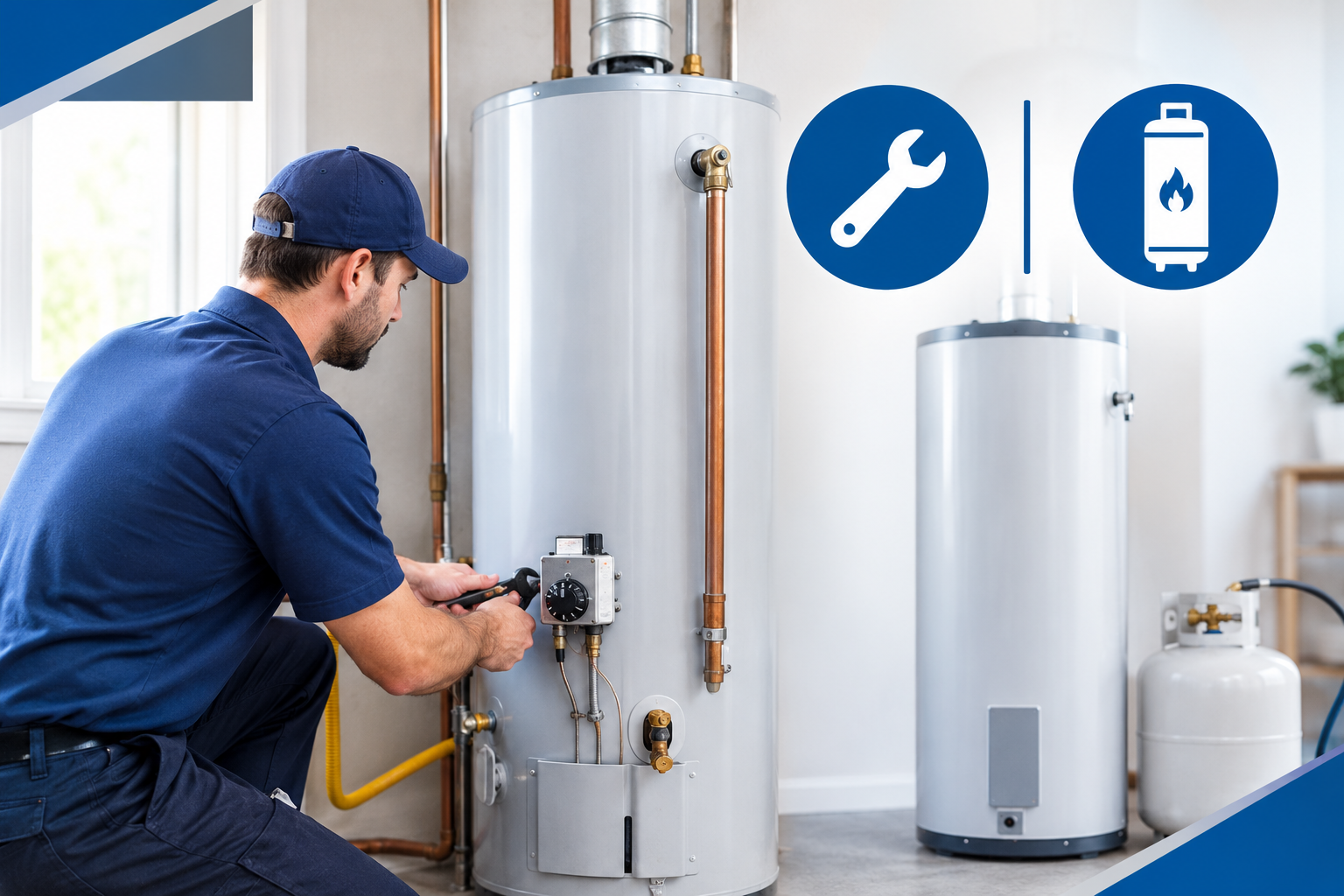
Waking up to a cold shower is never a good start to the day. For homeowners in Middle Tennessee, where winter mornings can run chilly and hot water is a daily necessity, a failing water heater is more than an inconvenience. The big question is whether to fix it or start fresh. Advanced Propane Inc can help customers evaluate their propane water-heating needs, and this guide walks you through the factors that can help you decide. Knowing when propane water heater repair makes sense can help you avoid unnecessary replacement costs, while knowing when replacement may be appropriate can help prevent repeated repair expenses.
Why Propane Water Heaters Are a Smart Choice
Propane water heaters are a popular option for homeowners who want reliable hot water and an efficient fuel source. Propane can heat water quickly and provide strong recovery performance, making it suitable for households with regular or high hot-water demand.
Efficiency and Reliability
Propane water heating can provide efficient performance, although actual operating costs depend on the equipment, household usage, propane prices, maintenance, and other factors.
Some propane water heaters can also continue operating during a power outage, depending on the specific model and ignition system. This can be an important consideration for homeowners who want access to hot water when electrical service is interrupted.
The key is choosing equipment that fits the household’s needs and keeping it properly maintained.
Warning Signs Your Propane Water Heater Needs Attention
A water heater usually gives you clues when something is starting to go wrong. Recognizing these signs early can help you address smaller problems before they become more serious.
1. Lukewarm or Inconsistent Hot Water
If your water never gets fully hot or the temperature changes unexpectedly, there may be an issue with the burner, thermostat, heating system, or another component.
2. Rumbling, Popping, or Banging Sounds
Unusual sounds from a tank water heater can be associated with sediment buildup. As sediment collects at the bottom of the tank, it can affect heating performance and create popping or rumbling noises.
3. Rusty or Discolored Water
Rust-colored hot water may indicate corrosion somewhere in the system. If the water heater tank itself is corroding, replacement may eventually be necessary.
4. Pilot Light Problems
If the pilot light repeatedly goes out, the problem could involve the thermocouple, gas supply, burner, or another component. Repeated pilot problems should be evaluated rather than continually relit without determining the cause.
5. Yellow or Orange Flame
A properly operating burner generally produces a steady blue flame. A yellow or orange flame can indicate a combustion or air-supply issue and should be inspected by a qualified professional.
6. Moisture or Water Around the Tank
Water around the base of the tank can indicate a leak. A leaking tank may require replacement, particularly if the tank itself has corroded.
7. Increasing Propane Usage
A noticeable increase in propane consumption without a corresponding change in household usage may indicate that the water heater is becoming less efficient or that another issue needs attention.
If you ever smell propane around your water heater, avoid operating electrical switches or creating flames or sparks, leave the area if necessary, and follow appropriate propane safety procedures. Contact your propane provider or emergency services as appropriate.
When Repair May Be the Right Move
Repair can make sense when the water heater is otherwise in good condition and the problem is limited to a replaceable component.
Consider the Age and Condition
The age of a water heater is an important factor, but it should not be the only consideration. A relatively newer unit with a minor repair may be worth fixing, while an older unit with significant corrosion or repeated problems may warrant replacement.
Rather than using a specific age as an automatic repair-or-replace rule, consider the unit’s overall condition, expected duration, repair history, and likely future maintenance needs.
Look at the Type of Problem
Some water heater problems involve individual components that can be repaired or replaced. Depending on the equipment, issues may involve items such as:
- Thermocouples
- Burners
- Thermostats
- Pressure relief valves
- Sediment buildup
- Pilot or ignition components
A qualified professional can determine whether the issue is isolated or whether it points to a larger problem with the water heater.
Consider the Repair Cost
Repair cost is another important factor. Instead of relying on a fixed percentage or “50 percent rule,” compare the expected repair cost with the condition and expected duration of the existing unit and the potential cost of future repairs.
For an otherwise healthy water heater, repairing a relatively minor issue may be practical. If significant repairs are becoming frequent, replacement may deserve consideration.
When Replacement May Be the Better Option
There are situations where replacing a propane water heater makes more sense than continuing to repair it.
1. The Unit Is Older and Showing Multiple Problems
As a water heater gets older, individual components can begin to wear out. An older unit with multiple issues or frequent repairs may be a candidate for replacement, but the decision should be based on its actual condition rather than age alone.
2. The Tank Is Leaking
A leaking tank is one of the more serious problems a tank-style water heater can develop. If the tank itself has failed or is severely corroded, replacing the water heater is generally the appropriate solution rather than attempting to repair the tank shell.
3. Repairs Are Becoming Frequent
If you find yourself calling for repairs repeatedly, the combined cost can become a consideration. Frequent repairs may indicate that replacement should be evaluated, especially when the unit is older or other components are beginning to fail.
4. Performance Has Declined
If the water heater is no longer providing enough hot water, takes much longer to recover, or consistently struggles to meet household demand, replacement may provide an opportunity to select equipment that better matches current needs.
Repair vs. Replace: What Should You Consider?
There is no single rule that applies to every propane water heater. Consider these factors together:
| Factor | Repair May Make Sense | Replacement May Be Worth Considering |
|---|---|---|
| Unit age | Relatively newer equipment | Older equipment with declining performance |
| Problem | Isolated component issue | Major tank or system problem |
| Repair history | Occasional repair | Frequent repairs |
| Condition | Tank and major components remain in good condition | Significant corrosion, leaking, or deterioration |
| Cost | Reasonable repair cost | Repair costs combined with future repairs become significant |
| Performance | Still meets household needs | No longer provides the desired performance |
A qualified professional can evaluate the equipment and help determine whether repairing the existing unit or replacing it makes more sense based on its condition and usage.
Comparing Replacement Options
If replacement is necessary, homeowners may have several options depending on their property, household needs, and available equipment.
1. Standard Propane Tank Water Heater
A traditional tank-style propane water heater stores and heats a supply of water so hot water is available when needed. These systems remain a practical option for many households.
2. High-Efficiency Propane Water Heater
High-efficiency equipment may use fuel more effectively than older models. The actual savings will depend on the equipment selected, household usage, propane prices, and other factors.
3. Tankless Water Heater
Tankless systems heat water as it is needed rather than storing a large volume of heated water. They can offer benefits such as space savings and reduced standby heat loss.
Advanced Propane Inc no longer installs tankless water heaters, but we are happy to make recommendations for customers who are considering tankless options. A qualified installer can then handle the installation based on the equipment manufacturer’s requirements and applicable local requirements.
How to Help Extend the Duration of Your Propane Water Heater
Proper maintenance can help your water heater operate effectively and may help extend its service duration.
Some general maintenance practices include:
- Flush the tank periodically to help reduce sediment buildup.
- Check the pressure relief valve according to the manufacturer’s recommendations.
- Have the anode rod evaluated periodically on tank-style water heaters.
- Keep the area around the water heater clear and follow the manufacturer’s ventilation requirements.
- Pay attention to unusual noises, leaks, changes in water temperature, or other performance problems.
- Have problems evaluated by a qualified professional rather than allowing small issues to continue unchecked.
Following the manufacturer’s maintenance recommendations is important because maintenance requirements can vary by equipment type and model.
Proudly Serving Middle Tennessee Communities
Advanced Propane Inc is proud to support homeowners and businesses across Middle Tennessee, including Lebanon, Ashland City, Cookeville, Hartsville, and surrounding communities. Customers throughout these areas can turn to Advanced Propane Inc for propane services and guidance related to their propane needs.
Making the Repair-or-Replace Decision
Deciding whether to repair or replace a propane water heater comes down to several factors, including its age, condition, repair history, performance, and the cost of addressing the current problem.
A relatively newer water heater with an isolated issue may be a good candidate for repair. On the other hand, an older unit with a leaking tank, declining performance, or repeated repairs may be worth evaluating for replacement.
Rather than relying on a single age or cost rule, have the equipment evaluated based on its actual condition and expected future performance. This can help you understand your options before making a decision.
Frequently Asked Questions
1. How long does a propane water heater usually last?
The duration of a propane water heater can vary depending on the equipment, installation, water quality, usage, and maintenance. Tank-style systems commonly provide many years of service, while the expected duration varies by model and conditions.
2. Can a leaking propane water heater be repaired?
If the problem is a failed connection or replaceable component, repair may be possible. However, if the actual storage tank is leaking because of corrosion or tank failure, replacement is generally required.
3. What should I do if my pilot light keeps going out?
Repeated pilot-light problems should be evaluated rather than continually relit without identifying the cause. The issue could involve the thermocouple, burner, gas supply, ignition system, or another component.
4. Will a new water heater lower my propane bills?
A newer, more efficient water heater may reduce fuel consumption depending on the equipment, household usage, propane prices, and condition of the existing unit. Actual savings will vary from one household to another.
5. How do I know what size water heater I need?
Water heater selection should be based on factors such as household size, hot-water demand, available space, equipment specifications, and installation requirements. Advanced Propane can help customers understand their propane water-heating options rather than relying on a generic size recommendation.
6. Why does my propane water heater make rumbling or popping sounds?
Rumbling or popping sounds can be associated with sediment buildup in tank-style water heaters. Having the unit evaluated can help determine the cause and whether cleaning or other maintenance is appropriate.
Need Help With Your Propane Water Heater?
Whether your propane water heater needs attention or you’re considering replacement, understanding the condition of your current equipment is the first step. Advanced Propane Inc can help you understand your propane options and make informed decisions based on your equipment and needs.
For more information or assistance, contact Advanced Propane Inc at 615-443-1883 or info@advancedpropaneinc.com.