
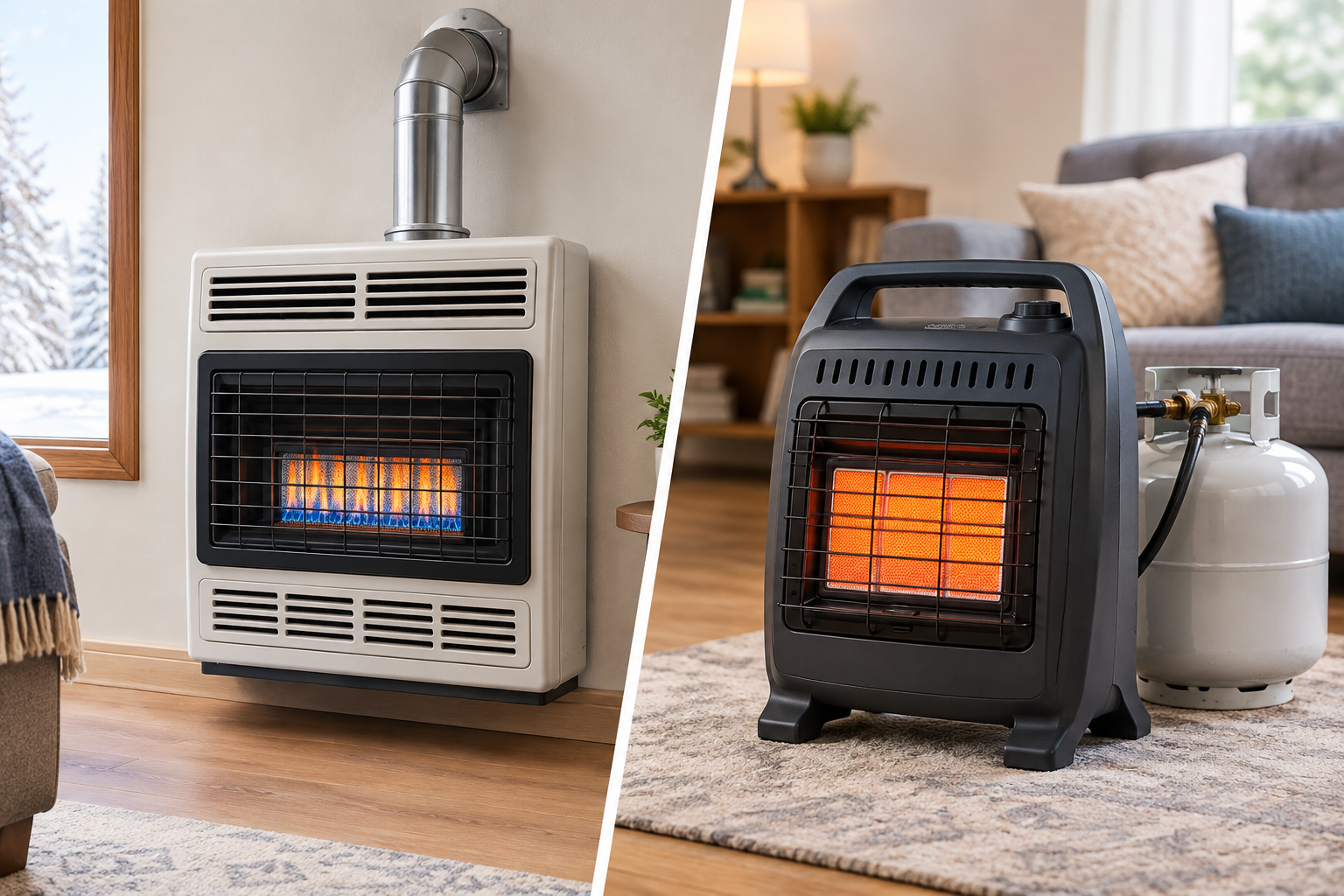
Cold snaps across Middle and Upper Middle Tennessee can arrive fast, and a reliable backup heat source makes a big difference when temperatures drop. Propane space heaters are a popular choice because they can warm a room quickly, and many models can operate during power outages. Before you buy, though, you need to understand the key difference between Vented vs. Vent-Free Propane Space Heaters, since the right choice affects your comfort, your safety, and your fuel usage.
How Propane Space Heaters Work
Propane space heaters burn propane gas to produce heat, which is released into your living space by radiant panels, blue-flame burners, or a blower fan. Every combustion process creates byproducts such as water vapor and carbon dioxide, and incomplete combustion can create carbon monoxide. What separates the two heater types is how they handle those byproducts.
A vented heater sends exhaust outdoors through a pipe or chimney. A vent-free heater burns the fuel within the appliance and releases combustion byproducts into the room, relying on built-in safety systems to monitor operating conditions. Understanding this basic design difference can help you decide which type suits your home, garage, workshop, or cabin.
What Is a Vented Propane Space Heater?
A vented propane heater, often called a direct-vent or B-vent unit, connects to a flue that carries combustion gases outside. Direct-vent models pull fresh air from outdoors and expel exhaust through a sealed system, so indoor air is generally separated from the combustion process.
This design can be useful in living areas and other spaces where directing combustion gases outdoors is preferred. Vented heaters require appropriate installation and a wall or roof penetration, which can add to the upfront installation requirements. Please note that Advanced Propane Inc does not install direct-vent or vented heaters, so this type of installation would need to be handled by a separate qualified contractor.
Advantages of Vented Heaters
- Exhaust gases, including carbon monoxide, are directed outdoors
- No combustion-related moisture is released directly into the room
- May be suitable for spaces where venting is required or preferred
- Can provide steady heat in appropriate living areas
- Direct-vent models use a sealed combustion system
Disadvantages of Vented Heaters
- Installation can cost more because of venting requirements
- Placement is affected by venting and installation requirements
- Some heat is carried outdoors with the exhaust
- Installation location may be more limited than with some vent-free models
What Is a Vent-Free Propane Space Heater?
A vent-free (or ventless) propane heater does not use a traditional chimney or exterior vent for combustion exhaust. These units are designed to burn propane efficiently and commonly include an oxygen depletion sensor (ODS) that can shut the appliance down if oxygen levels become too low.
Because combustion byproducts are released into the room, vent-free heaters require careful attention to the manufacturer’s instructions, room-size requirements, ventilation requirements, and applicable local regulations.
Advantages of Vent-Free Heaters
- No traditional venting system is required
- Can have high rated combustion efficiency
- Flexible installation options may be available depending on the model
- Can be useful as supplemental heat in appropriate spaces
- Many models can provide heat without relying on electricity
Disadvantages of Vent-Free Heaters
- Adds moisture to indoor air
- Requires the room to meet the manufacturer’s requirements
- Restricted or prohibited in some locations or building types
- May not be appropriate for bedrooms or bathrooms depending on the model and applicable requirements
- Some users may notice an odor under certain operating conditions
Vented vs. Vent-Free: Side-by-Side Comparison
| Feature | Vented Heater | Vent-Free Heater |
|---|---|---|
| Exhaust Removal | Directed outdoors | Released into the room |
| Installation | Requires appropriate venting | Does not use traditional exterior venting |
| Efficiency | Varies by model | Often rated at very high combustion efficiency |
| Indoor Moisture | Does not release combustion moisture directly into the room | Adds combustion-related moisture |
| Potential Uses | Living areas and other suitable spaces | Supplemental heating in spaces that meet requirements |
| Code Restrictions | Varies by location and model | May have additional restrictions in some areas |
| Placement Flexibility | Affected by venting requirements | Can offer more flexibility, subject to manufacturer and local requirements |
Safety Considerations You Should Never Skip
Whichever style you choose, safety comes first. Every propane appliance should be installed according to the manufacturer’s instructions and applicable requirements, with gas connections and other installation work handled by a qualified professional when required.
Homes using fuel-burning appliances should also have working carbon monoxide detectors in appropriate locations.
Instead of relying on a universal three-foot clearance rule, keep furniture, curtains, bedding, and other combustible materials away from the heater according to the specific clearance requirements provided by the manufacturer.
For vent-free models in particular, follow the manufacturer’s room-size and operating requirements. Do not add ventilation by simply opening a door or window unless the manufacturer specifically requires or permits that approach. Also check applicable local building codes and any homeowner or rental requirements before installing a vent-free unit.
If you notice yellow flames, soot, a persistent propane odor, unusual operation, or the heater shutting off repeatedly, stop using the appliance and have it evaluated by a qualified professional.
How to Choose the Right Heater for Your Home
The right option depends on how you plan to use the heater and the requirements of the space. Ask yourself these questions before you decide:
- Will this be your main heat source or supplemental heat?
- Is the room a bedroom, living space, garage, or workshop?
- Do you already have a suitable chimney or flue?
- What is your budget for both the unit and installation?
- Are you concerned about indoor humidity?
- What do local codes and the manufacturer’s instructions allow?
A vented heater may be appropriate when directing combustion gases outdoors is a priority, while a vent-free heater may be suitable for certain supplemental-heating applications when the space meets the manufacturer’s and applicable local requirements.
If you’re unsure, a propane professional can help you understand the available options and determine what installation requirements apply to your space. If a vented or direct-vent heater turns out to be the right fit, keep in mind that you’ll need to arrange installation through a venting-qualified contractor, as Advanced Propane Inc does not install these units.
Cost and Efficiency Comparison
| Cost Factor | Vented Heater | Vent-Free Heater |
|---|---|---|
| Unit Price | Varies by model | Varies by model |
| Installation | May require professional venting installation | May have fewer venting requirements |
| Fuel Use | Depends on equipment and usage | Depends on equipment and usage |
| Maintenance | Follow manufacturer recommendations | Follow manufacturer recommendations |
The lowest upfront price does not necessarily represent the total cost of ownership. When comparing heaters, consider the equipment price, installation requirements, propane usage, maintenance, applicable regulations, and how the heater will be used.
Serving Lebanon, Ashland City, Cookeville, and Hartsville
Advanced Propane Inc serves homeowners, families, and businesses in Lebanon, Ashland City, Cookeville, Hartsville, and surrounding Middle Tennessee communities. Customers in these areas can contact Advanced Propane Inc for propane service and guidance related to propane heating options.
Frequently Asked Questions
1. Which is safer, a vented or vent-free propane heater?
Both types are designed with safety features, but they operate differently. Vented heaters direct combustion gases outdoors, while vent-free models release combustion byproducts into the room and use built-in safety features. The appropriate choice depends on the specific equipment, installation, room requirements, and applicable local regulations.
2. Can I use a vent-free propane heater in a bedroom?
Requirements vary by product and jurisdiction, and some vent-free heaters may not be permitted in bedrooms. Always check the manufacturer’s instructions and applicable local regulations before installing one.
3. Do vent-free heaters cause moisture problems?
Vent-free propane heaters can add water vapor to indoor air because combustion occurs in the room. Depending on the space and ventilation conditions, this can contribute to condensation or humidity concerns. A properly installed vented heater directs combustion products outdoors.
4. Do I need a professional to install a propane space heater?
Gas connections, venting, and other installation work should be handled according to the manufacturer’s instructions and applicable local requirements. A qualified professional can help ensure the appliance is installed and tested properly.
5. Will a propane heater work during a power outage?
Many propane space heaters can operate without electricity, but this depends on the specific model. Some units use electrical ignition, fans, or other electrical components, so check the manufacturer’s specifications before purchasing a heater for backup use.
6. How often should my propane heater be serviced?
Follow the manufacturer’s maintenance and inspection recommendations for your specific heater. A qualified professional can evaluate the burner, connections, venting where applicable, and safety components if the appliance shows signs of unusual operation or requires service.
Contact Us
Choosing between a vented and vent-free propane space heater depends on your space, intended use, installation requirements, and applicable local regulations. Understanding how each type operates can help you make an informed decision before purchasing or installing a unit.
Advanced Propane Inc can answer questions about propane heating and help you understand your options.
Phone: +1 615 443 1883
Email: info@advancedpropaneinc.com